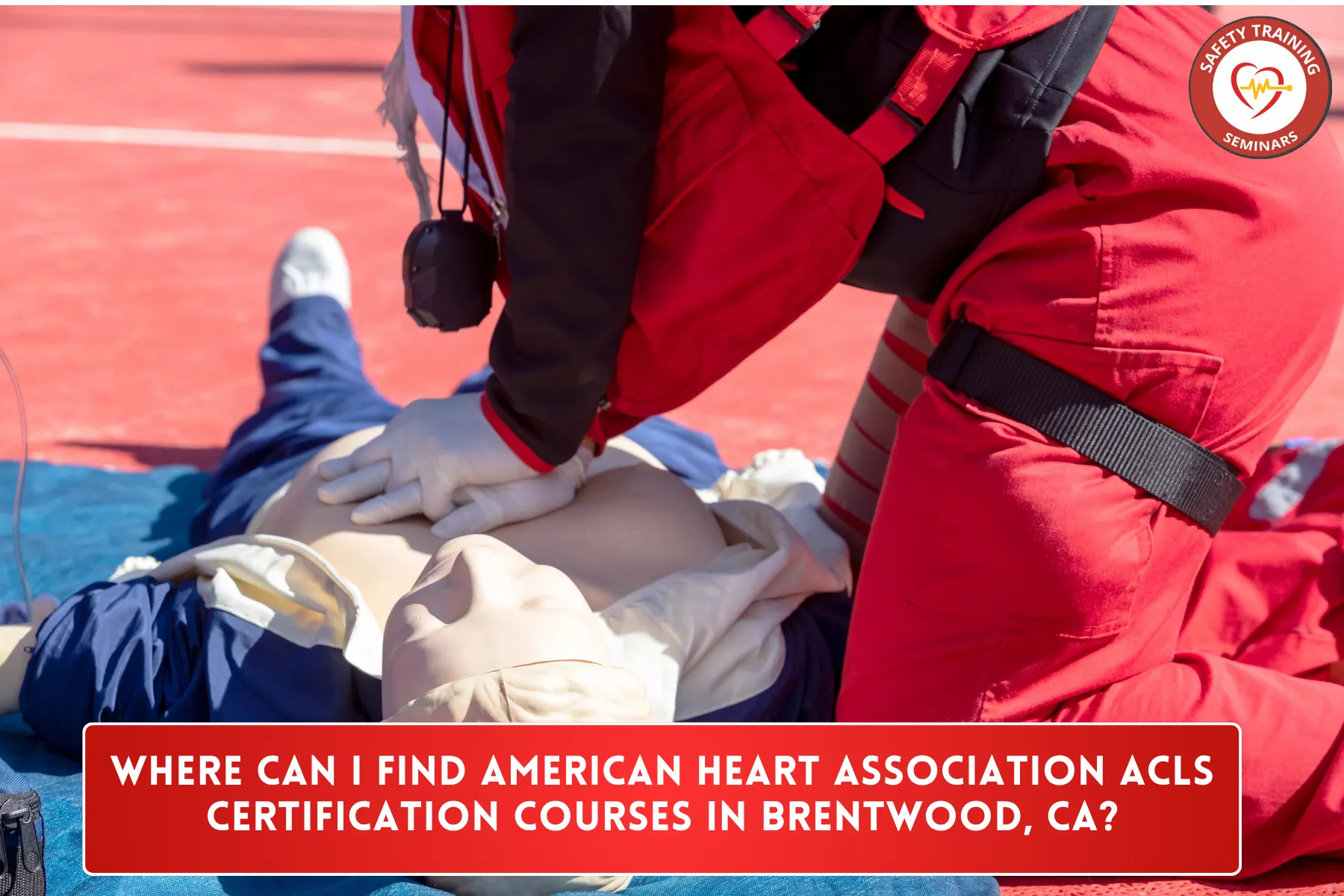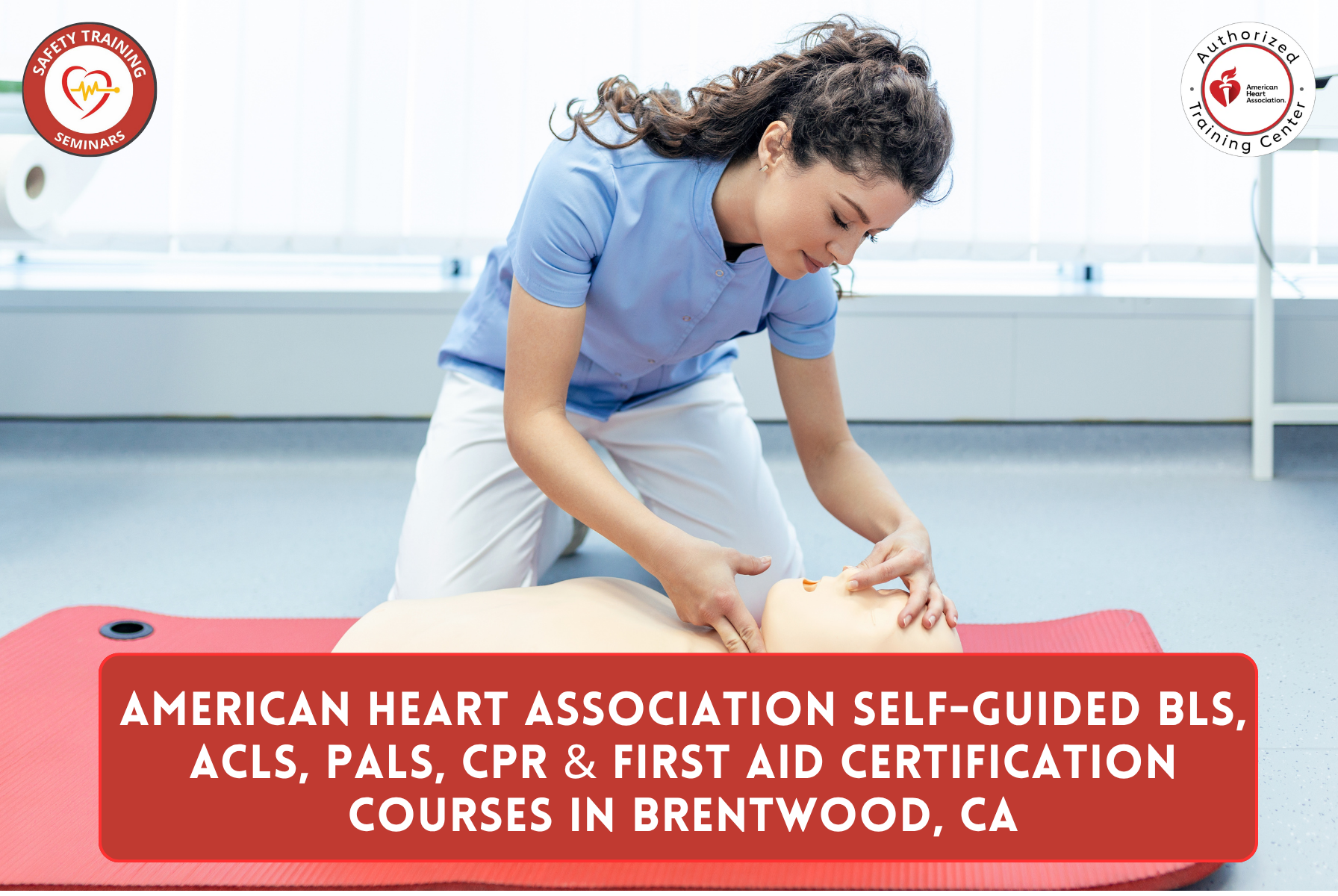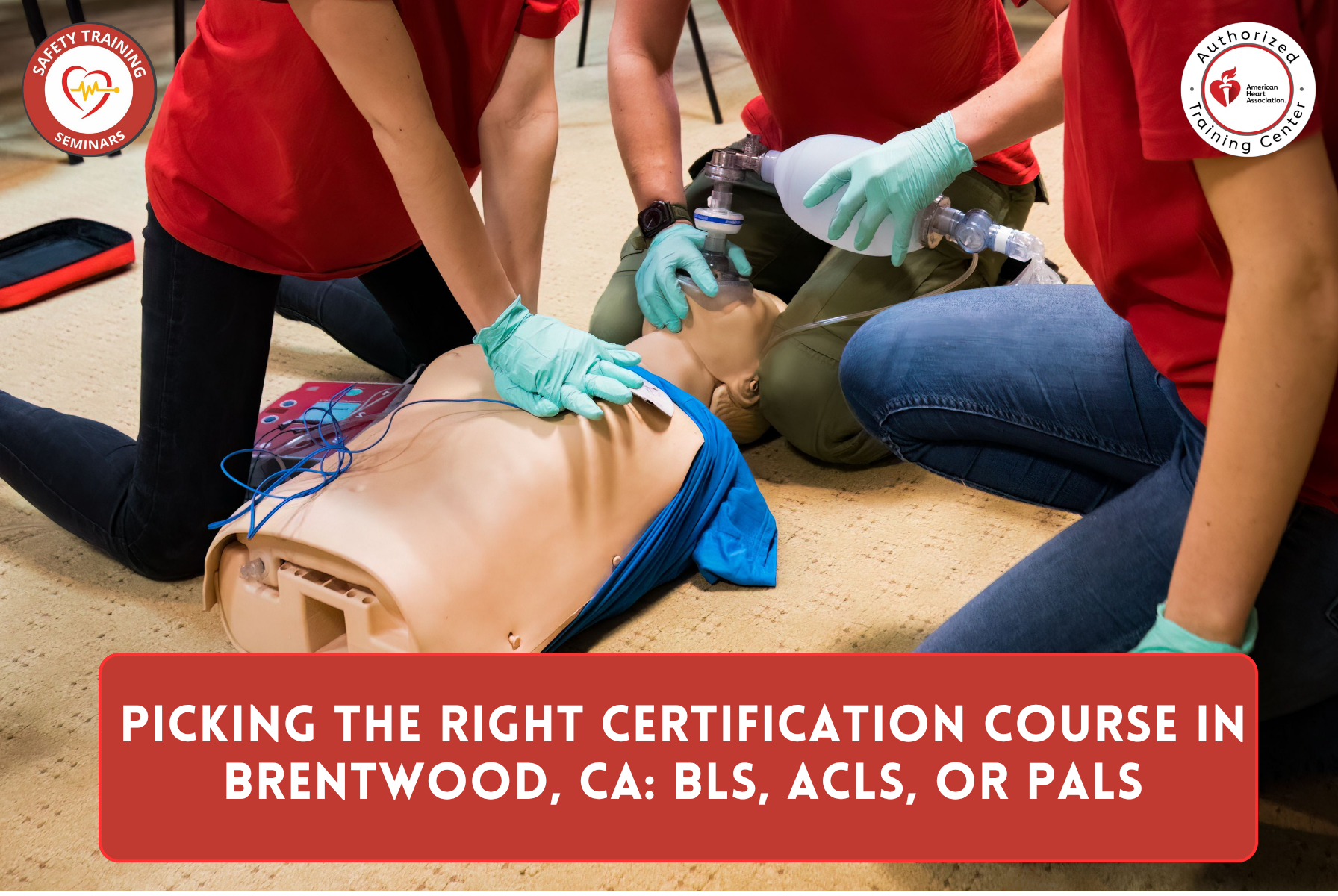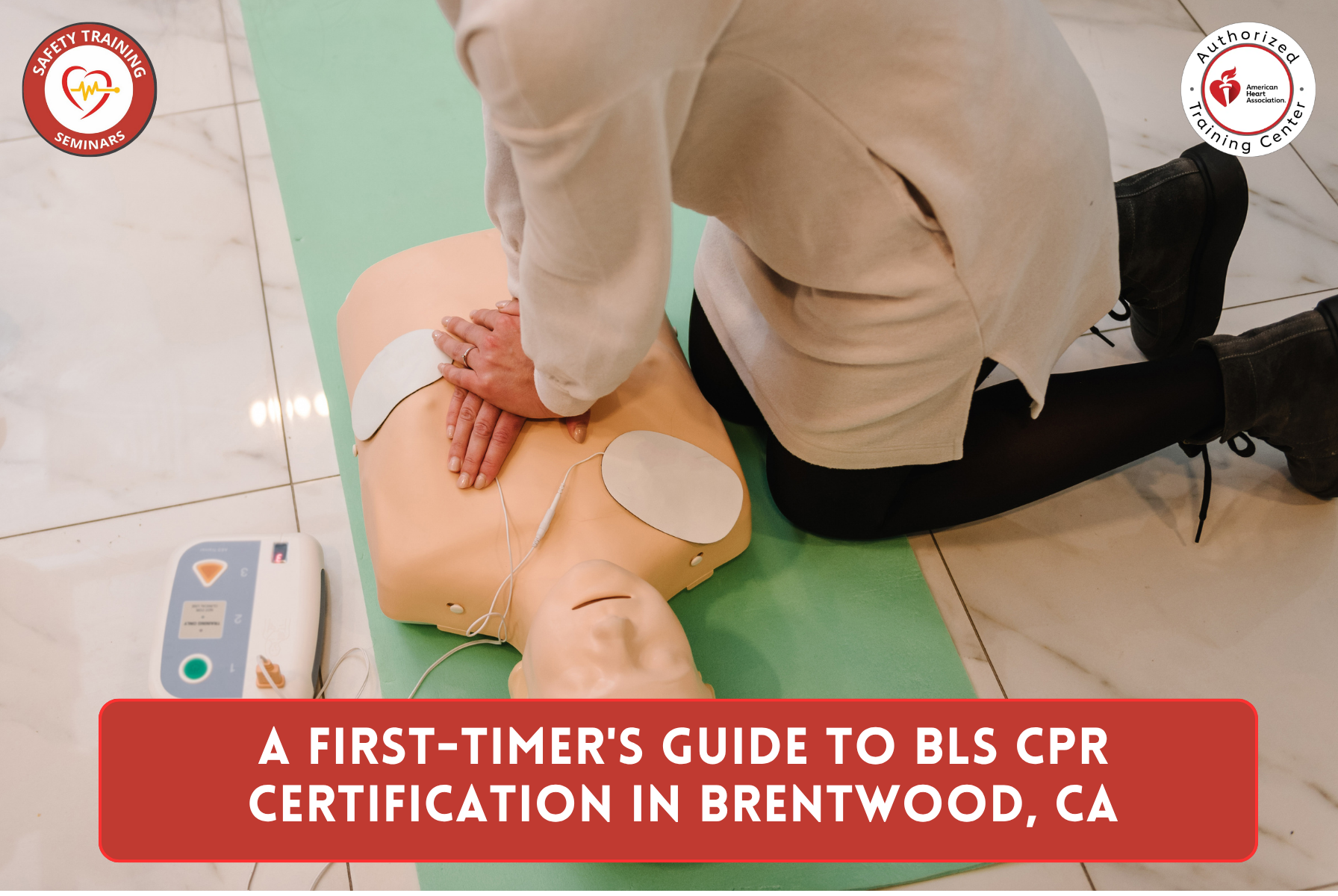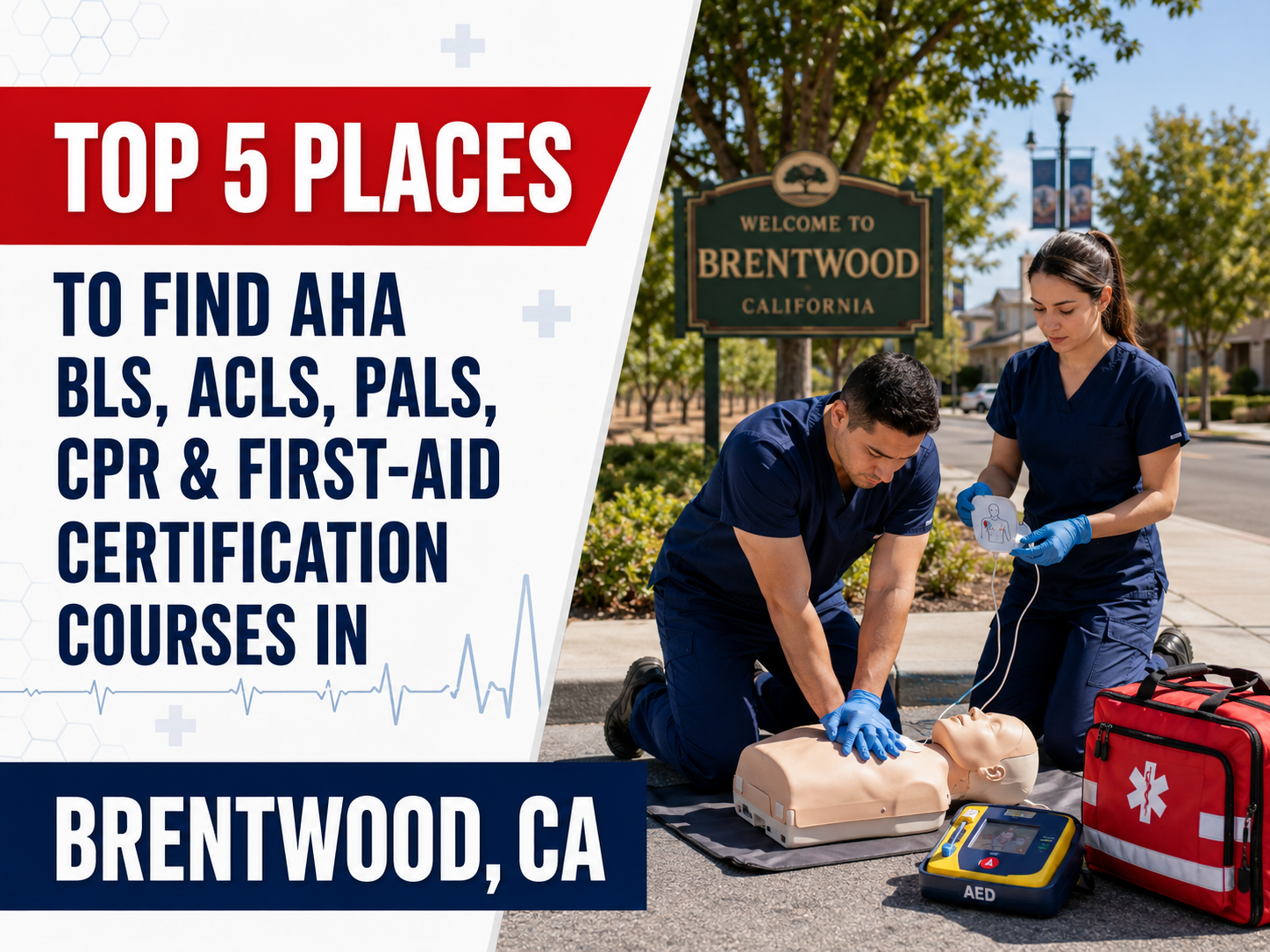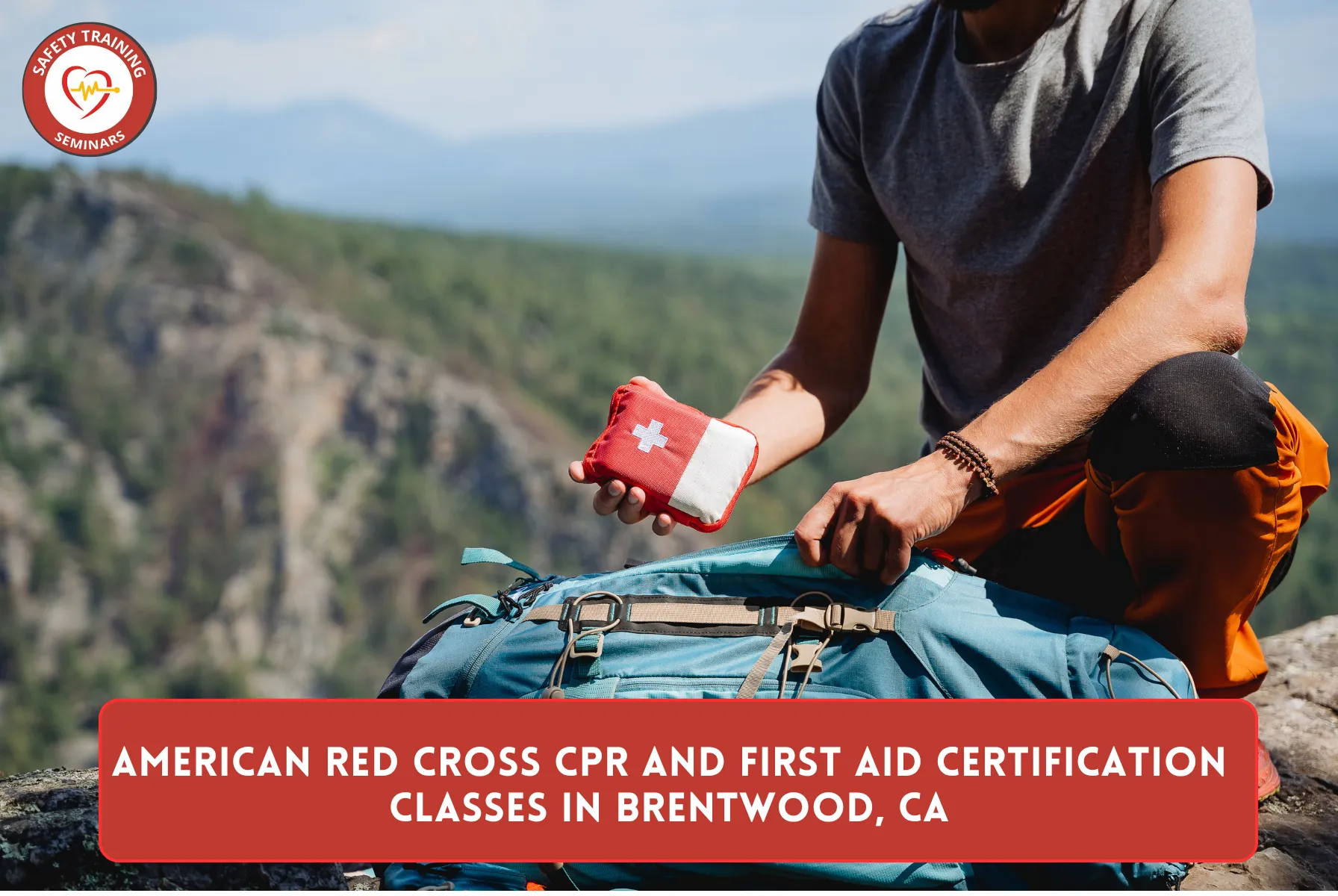
Few East Contra Costa cities have changed as fast as Brentwood, which grew from a small farm town into a suburb of more than 60,000 residents in barely two decades. That growth brought new schools, youth sports leagues, childcare centers, and a busy retail corridor around the Streets of Brentwood, and with all of it came more people who need current CPR or First Aid training for a job, a coaching role, or their own family. American Red Cross CPR and First Aid certification classes teach the response skills behind those requirements: recognizing an emergency, performing chest compressions, using an AED, and treating common injuries before help arrives. Course categories generally include CPR, First Aid, CPR/AED, and combined First Aid/CPR/AED training. Parents, coaches, teachers, caregivers, and local employees are among the Brentwood residents most likely to look for a class.
Key Takeaway
Anyone searching in Brentwood can pursue American Red Cross CPR and First Aid training shaped around a specific need, whether it’s a workplace assignment, a coaching or childcare role, a school requirement, or readiness at home with young kids. Which class fits depends on what your employer, program, or licensing body specifies, so pin that down before you enroll.
What American Red Cross CPR and First Aid Classes Cover
CPR training focuses on cardiac and breathing emergencies. You learn to check whether someone is responsive, summon help, and keep blood and oxygen moving through chest compressions and rescue breaths. Most CPR instruction also introduces the AED, the device that can restore a normal heart rhythm.
First Aid training looks outward to everything else that can go wrong before paramedics arrive: cuts, burns, sudden illness, and a range of injuries that have nothing to do with the heart. The two subjects overlap in real life, which is why they’re so often taught in the same class.
AED skills usually live inside CPR or combined courses rather than standing alone, since defibrillation and compressions are used together. A hands-on component appears in many American Red Cross classes, and it carries weight when a role expects you to physically demonstrate what you’ve learned. Because content and format shift from one course to the next, reading the class description and confirming your requirement beforehand saves trouble later.
First Aid and AED Training in Brentwood
Given how much of Brentwood life happens outdoors and in family settings, First Aid often matters as much as CPR here. A coach on a summer field, a parent at a crowded U-pick orchard, or a staff member at a busy weekend event may face a scrape, a heat-related illness, or an allergic reaction long before a cardiac event.
First Aid training prepares people for that wider set of situations, and combined First Aid/CPR/AED courses bring the two skill sets together. The audiences that gravitate toward this training include:
- Youth sports coaches and league volunteers
- Teachers and after-school program staff
- Childcare providers and preschool workers
- Fitness instructors and recreation employees
- Parents and family caregivers
- Retail and service employees around town
AED awareness fits naturally into the mix, since gyms, schools, and public buildings increasingly keep defibrillators on site. When comparing First Aid and AED options, match the course scope to the emergencies your role actually involves.
CPR Training in Brentwood
CPR classes in the area generally split between everyday preparedness and job-related requirements. Depending on the course, instruction may cover adult CPR, child CPR, and infant CPR, because the technique adjusts to a person’s age and size.
A new parent might zero in on infant and child CPR, while a designated workplace responder at a Streets of Brentwood business may need a course that documents completion for safety purposes. Some CPR classes fold in AED practice and choking response. What any single class includes comes down to the specific American Red Cross course you pick, so read carefully before registering. Residents weighing their CPR and BLS class options in Brentwood should check whether hands-on practice is part of the format their role expects.
Who Typically Takes CPR and First Aid Classes?
Parents and caregivers. In a city with a household size well above the state average and many young families, home readiness is a common reason people enroll.
Coaches and fitness professionals. Youth leagues, recreation programs, and gyms often want staff who can respond to injuries and cardiac events.
Teachers and childcare providers. Schools within Brentwood’s districts and licensed childcare settings may require or prefer current CPR and First Aid training for certain roles.
Workplace employees. Retail, hospitality, and service businesses sometimes designate trained responders to meet safety expectations.
Healthcare support personnel. Staff connected to local clinics and outpatient services may need CPR at a level set by their position.
Students. Those applying to nursing, EMT, or allied-health programs may need certification for clinical placement or work. None of these requirements is universal, so verify yours directly.
How to Choose the Right CPR and First Aid Course
Picking the wrong class is a common and avoidable setback. Use the table as an orientation point, then confirm the specifics.
| Training Type | Typical Use |
| CPR | CPR-focused emergency-response training |
| First Aid | Response to common injuries and medical emergencies |
| CPR/AED | Combines CPR education with AED-related training |
| First Aid/CPR/AED | Broader emergency-response training across multiple areas |
Treat this as a guide rather than a legal standard. Before enrolling, verify the exact requirement with your employer, your school, a healthcare organization, a licensing or professional board, a workplace safety coordinator, or the training program itself. That quick check keeps you from paying for a course that doesn’t satisfy the requirement you’re trying to meet.
Local Brentwood Training Considerations
Brentwood sits at the eastern edge of Contra Costa County, roughly 55 miles from San Francisco, on the flat, fertile plains that gave the city its cherries, corn, and peaches. Agriculture still shapes the calendar here, and the summer rush of you-pick farms and farm stands draws seasonal workers and big weekend crowds. That rhythm creates real-world moments where First Aid and CPR knowledge is useful.
Because Brentwood anchors far East County alongside Oakley, Discovery Bay, and Antioch, many residents prefer to train locally rather than drive west toward central Contra Costa. The Highway 4 Bypass connects the city to the wider region, but for a CPR or First Aid class, staying close to home is simply easier to fit around work and family. The area’s expanding schools, recreation programs, and retail employers keep steady interest in local First Aid and CPR training across a range of audiences.
Safety Training Seminars in Brentwood
For people in and around town, Safety Training Seminars runs a local training location in Brentwood, CA:
Safety Training Seminars – Brentwood CPR Training Center: 380 Carrol Court, Suite G, Brentwood, CA 94513
A local site cuts the travel time that would otherwise send East County residents across the county for a class. Before you register, look at which course matches your purpose, what format it uses, and whether it includes the hands-on practice your role calls for. If your requirement mentions a specific course type or documentation, match that language to the class description first. Confirming the requirement in advance keeps the process simple and makes sure the training you complete actually counts.
Why Consider Safety Training Seminars for CPR and First Aid Training in Brentwood
A few practical points may factor into your decision. There’s a training location within Brentwood itself, which shortens travel for East County families and workers. The center offers CPR and First Aid course options, along with related training categories for people who need coursework beyond the basics. Course and registration details are available to review ahead of time, so you can line a class up against your actual requirement before committing to a date.
Frequently Asked Questions
Do youth sports coaches in Brentwood usually need CPR and First Aid training?
Often, yes. Many leagues, schools, and recreation programs ask coaches and volunteers to hold current CPR and First Aid certification, though the exact expectation depends on the organization. Some want combined First Aid/CPR/AED training. Coaches should confirm with their league or district which certification is accepted before signing up for a class.
Does a First Aid class automatically include CPR?
Not necessarily. First Aid and CPR are distinct subjects that are frequently combined but can also be taken separately. If you need both, a First Aid/CPR/AED course covers them together. If your requirement is CPR only, a standalone class may be enough. Check how your requirement is worded so you enroll in the right option.
Which CPR classes can I find near Brentwood?
Brentwood residents can generally access American Red Cross CPR courses covering adult, child, and infant CPR, often paired with AED training. Some classes serve families and the general public, while others target workplace or professional needs. Content varies by course, so review the description and match it to your job, school, or personal goal before you register.
Will a Brentwood employer accept American Red Cross certification?
Many employers accept American Red Cross CPR and First Aid certification, but it isn’t guaranteed everywhere. Certain roles specify a particular course level or format. The dependable step is to ask your employer or safety coordinator which training they recognize before enrolling, so your certification meets their standard when you present it.
Is hands-on practice part of these courses?
It can be, and for many roles it’s the point. Positions that expect you to demonstrate CPR or AED use typically call for an in-person skills component rather than a knowledge-only format. Since classes differ, confirm that the course you choose includes the hands-on practice your job or program requires.
Can parents take these classes just for home readiness?
Yes. Plenty of parents and caregivers enroll purely to feel prepared for their own children, with no workplace requirement involved. Infant and child CPR, choking response, and basic First Aid are common priorities for families. Look for a class that emphasizes the age groups and situations most relevant to your household.
Conclusion
In plain terms: CPR training handles cardiac and breathing emergencies, First Aid covers the broader range of injuries and sudden illnesses, and AED skills connect to both. The class worth taking is the one that matches your actual reason for training, not simply the shortest or the closest. For Brentwood’s growing base of families, coaches, and local employees, Safety Training Seminars offers a nearby option for American Red Cross CPR and First Aid training on Carrol Court. Take a moment to confirm what your employer, school, league, or organization requires, then choose the course that meets it. That single step keeps your certification useful when the day comes that you need to use it.