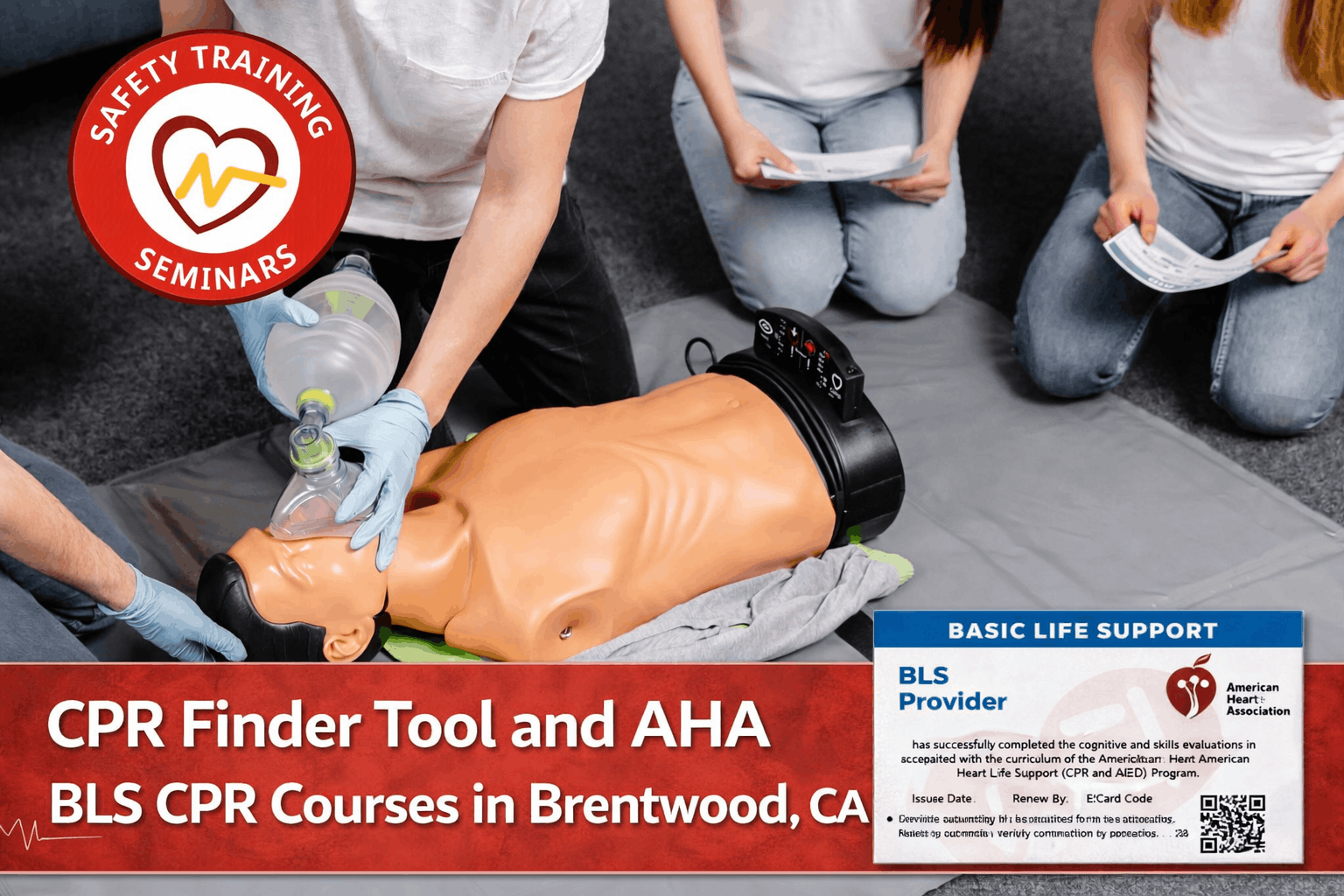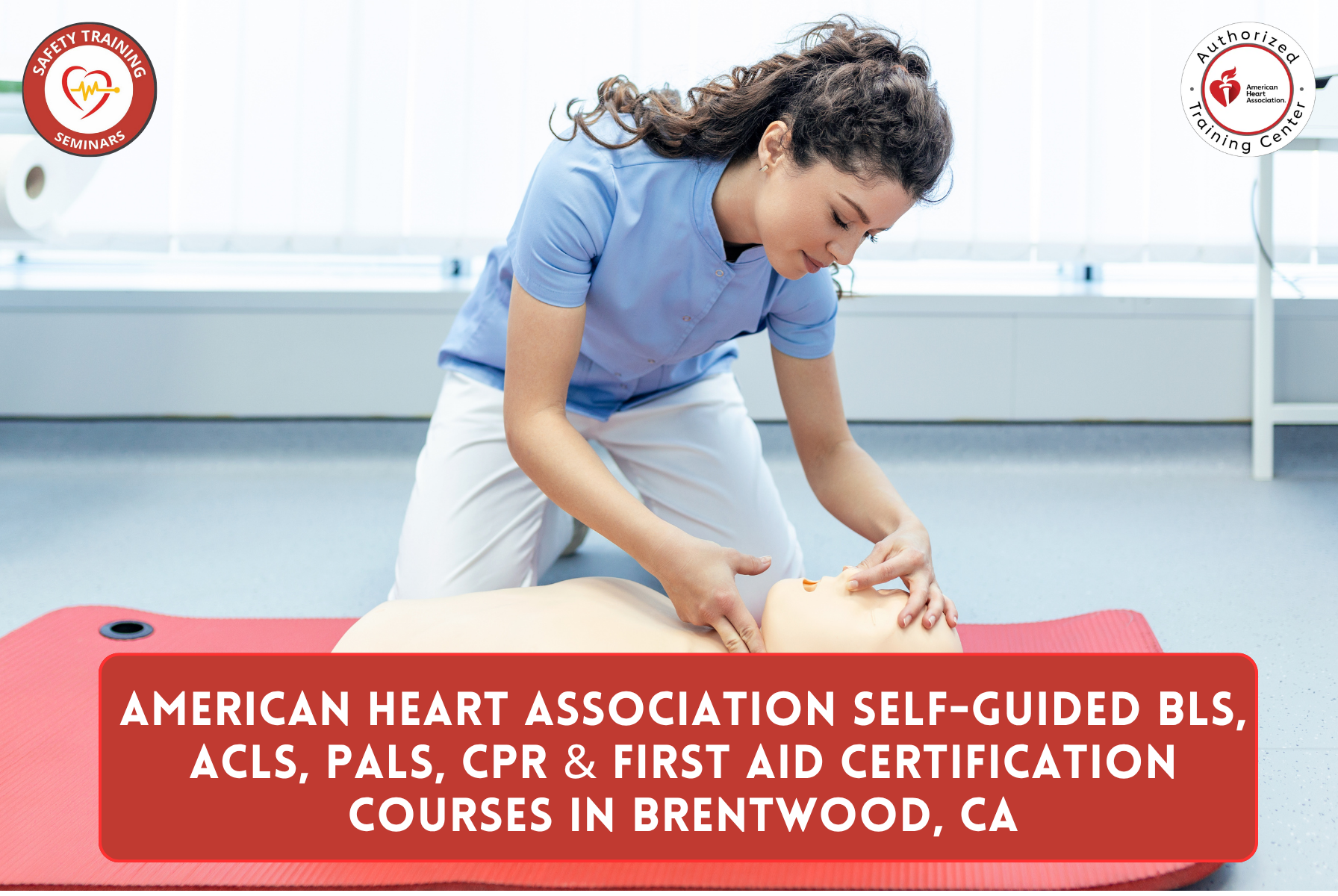
For healthcare professionals, students, and workplace learners in Brentwood, California, finding the right CPR or resuscitation course often starts with understanding the training format. American Heart Association Self-Guided Learning offers an option for people who want to complete the educational portion independently while still addressing applicable hands-on skills requirements.
The format can be relevant to healthcare professionals pursuing BLS, ACLS, or PALS, as well as organizations looking for flexible First Aid, CPR, and AED training options. Instead of treating every course as interchangeable, learners should first identify what their employer, school, or organization actually requires.
For someone researching BLS classes in Brentwood, ACLS or PALS training, or CPR and First Aid courses, the important questions are straightforward: What does Self-Guided Learning include? Which course matches your role? And does the course provide the completion documentation you need?
Key Takeaway
American Heart Association Self-Guided Learning is designed to give eligible learners more control over the timing of their education while retaining applicable hands-on skills practice and verification. It is different from simply taking an online-only course, so Brentwood learners should confirm the required course and completion format before enrolling.
How Does AHA Self-Guided Learning Work?
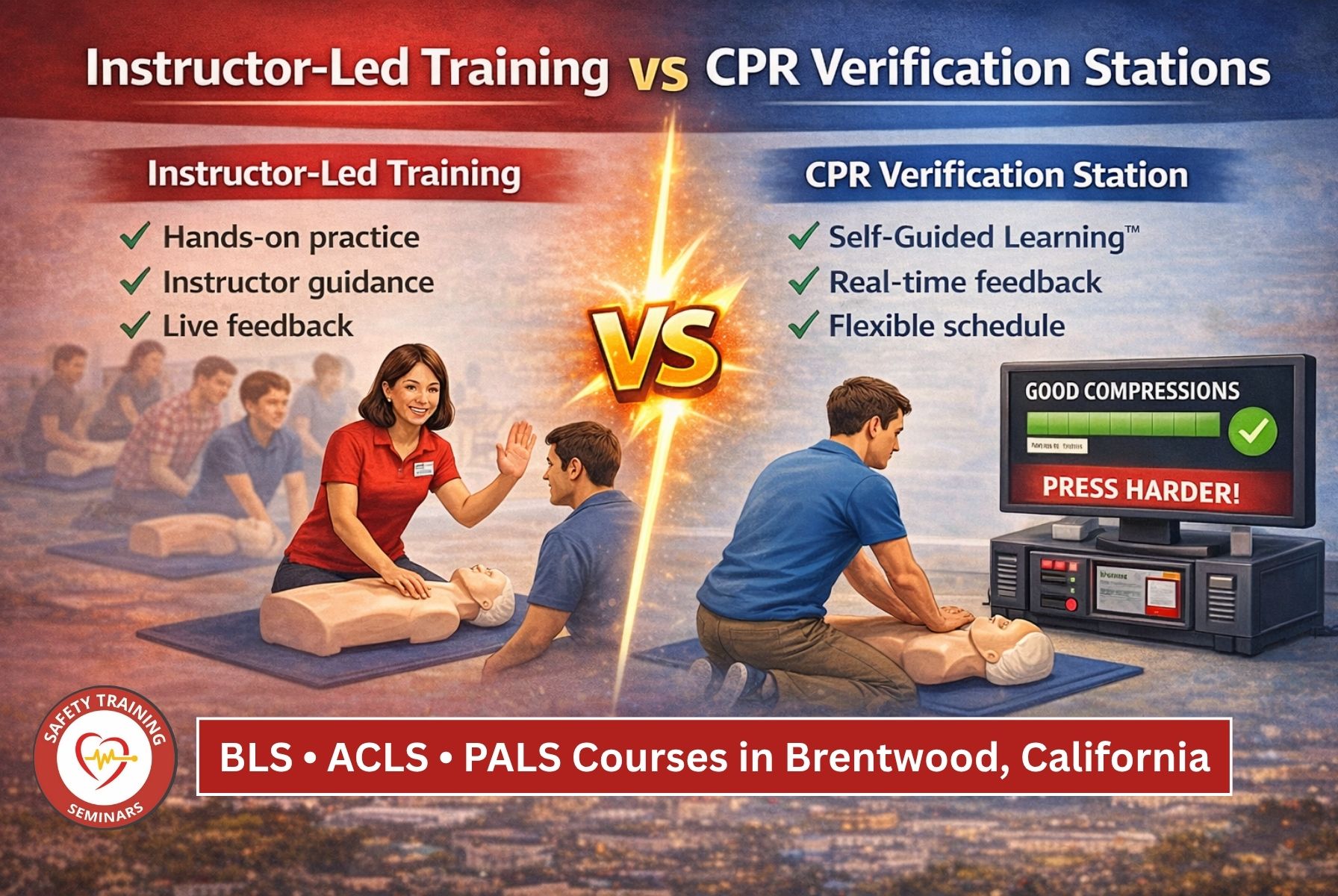
Self-Guided Learning separates the cognitive learning experience from the hands-on portion of training. The learner works through the educational material independently and then completes the applicable skills component using an approved CPR Verification Station.
For BLS, ACLS, and PALS, the AHA currently describes Self-Guided Learning as online cognitive learning followed by a hands-on skills session at an approved CPR Verification Station. These learning centers provide objective, coached feedback intended to help learners verify skills competency.
That makes the format different from an online-only program. Completing videos, reading course material, or passing an online quiz does not automatically mean that all hands-on requirements have been addressed.
A typical Self-Guided Learning experience involves:
- Identifying the course that matches your professional or workplace requirement.
- Completing the cognitive learning portion independently.
- Completing the applicable hands-on skills practice.
- Performing skills verification or testing when required.
- Finishing the course requirements and receiving the applicable course completion eCard when successful.
The exact process can vary by course, so learners should review the details for the specific training they plan to take.
BLS Training in Brentwood for Healthcare Professionals
BLS is generally associated with healthcare professionals and other individuals whose responsibilities involve providing patient care or responding to clinical emergencies. Nurses, physicians, EMTs, paramedics, medical assistants, dental professionals, and healthcare students are examples of people who may encounter BLS requirements.
The BLS course is not simply another name for general public CPR training. Its content is structured for healthcare-related situations and includes individual and team basic life support skills.
For a nursing student in Brentwood, for example, the correct course may be determined by the nursing program rather than personal preference. A medical employee renewing training may similarly need to follow the requirements of the employer.
If you are comparing BLS and CPR training in Brentwood, start by checking the exact course name your organization has requested.
ACLS in Brentwood: For Advanced Adult Cardiovascular Care
ACLS is intended for healthcare professionals involved in managing adult cardiovascular emergencies. It is therefore a different level of training from general CPR or BLS.
Physicians, nurses, paramedics, and other clinical professionals may encounter ACLS requirements depending on their role and workplace. The AHA’s Self-Guided Learning option for ACLS combines independent cognitive learning with hands-on skills practice and verification through a CPR Verification Station.
One point worth checking before enrollment is whether your organization expects ACLS in addition to BLS. The AHA states that ACLS does not include BLS as a substitute course, although healthcare providers taking ACLS are expected to be proficient in BLS skills. Individual Training Centers or employers may have additional requirements.
PALS Classes in Brentwood for Pediatric-Focused Roles
PALS is designed around pediatric emergency care and is intended for appropriate healthcare professionals who may respond to emergencies involving infants and children.
This can make PALS relevant to healthcare workers whose responsibilities involve pediatric patients. A clinician working in a pediatric environment may have a very different training requirement from someone whose practice is primarily adult-focused.
The AHA’s PALS Self-Guided Learning format includes online cognitive learning followed by hands-on skills work and verification at an approved CPR Verification Station.
For local learners comparing Brentwood BLS, ACLS, and PALS course options, the best starting point is the requirement from the employer, healthcare organization, or educational program—not simply the course that sounds most advanced.
CPR, AED and First Aid for Brentwood Workplaces and Community Learners
CPR, AED, and First Aid training can be more appropriate for people outside traditional healthcare roles. Teachers, childcare workers, coaches, fitness professionals, caregivers, workplace employees, parents, and community members may have training needs that do not call for BLS, ACLS, or PALS.
The AHA offers First Aid, CPR, and AED training options for general public, workforce, and non-clinical audiences. Its current Self-Guided Learning information also identifies Heartsaver Direct as a flexible option for corporate and workplace training.
The distinction between courses matters. The AHA specifically states that first aid is not included in its BLS courses; separate First Aid offerings are available.
Therefore, an employee who has been asked to complete First Aid and CPR should not automatically register for BLS simply because BLS sounds more comprehensive. Match the course to the actual requirement.
Which Course Is Right for You?
A simple comparison can help narrow the choices:
| Course | Typical audience |
| BLS | Healthcare professionals and appropriate healthcare students |
| ACLS | Healthcare professionals involved in adult cardiovascular emergency care |
| PALS | Healthcare professionals involved in pediatric emergency care |
| CPR/AED | General public, workplace, and community audiences |
| First Aid | Workplace, education, childcare, community, and general audiences |
These descriptions identify typical audiences rather than universal employment or licensing rules. Your employer, school, healthcare organization, licensing organization, or training program may have its own requirements.
Before purchasing a course, confirm four things: the course name, delivery format, hands-on skills requirement, and completion documentation expected by the organization requesting the training.
Self-Guided Learning vs. Classroom and Online-Only Courses
The biggest difference between the available formats is how the learning experience is organized.
Self-Guided Learning
With Self-Guided Learning, the learner completes the cognitive portion independently and then addresses the applicable hands-on skills component at an approved verification station. This provides greater control over when the educational portion is completed.
This format may appeal to a healthcare professional working irregular shifts or a student balancing clinical education with other responsibilities.
Traditional Classroom Training
Traditional classroom training places the learner and instructor together for the training experience. The instructor administers the cognitive portion as well as hands-on practice and testing.
This approach can work well for learners who prefer scheduled instruction and direct interaction throughout the course.
Online-Only Training
An online-only course may provide educational content without the hands-on component required by certain training pathways. That difference can matter when an employer or school specifically expects practical skills verification.
For that reason, do not assume that any online CPR course meets an organization’s requirement simply because it provides a certificate. Verify the specific course and completion format first.
Why Self-Guided Training Can Make Sense for Brentwood Learners
Brentwood learners can have very different reasons for seeking training. A nursing student may need to fit BLS study around classes and clinical rotations. A healthcare employee may be renewing a required course while managing an existing work schedule. A teacher or childcare provider may be looking for CPR and First Aid training connected to workplace responsibilities.
Self-Guided Learning can be useful in situations where controlling the timing of the educational portion is important. It can also make sense for learners who prefer to review material independently before completing the practical component.
The flexibility should not, however, become the only deciding factor. A convenient course is not necessarily the correct course if it does not match the requirement you were given.
Safety Training Seminars in Brentwood, CA
Safety Training Seminars provides a local option for people researching CPR and healthcare training in Brentwood. The supplied local training-center information for this page is 1700 Solano Ave, Suite F, Brentwood, CA 94707.
Before registering, determine whether you need BLS, ACLS, PALS, CPR/AED, First Aid, or another specific course. Then review the applicable local course page and verify that the format and completion requirements correspond to what your employer, school, or organization has requested.
For healthcare professionals, that may mean beginning with BLS, ACLS, or PALS. For workplace and community learners, CPR/AED or First Aid may be more appropriate. The important step is matching the training to the purpose for which it is being requested.
What to Check Before Registering
Use this short checklist before selecting a Self-Guided Learning course:
- Confirm the course: Find out whether you need BLS, ACLS, PALS, CPR/AED, or First Aid.
- Check the format: Ask whether Self-Guided Learning is accepted for your particular requirement.
- Review hands-on requirements: Determine whether skills practice and verification are part of the course.
- Verify the completion card: Confirm what course completion eCard or documentation your organization expects.
- Ask about renewal: If you already have a course completion card, check whether you need an initial or renewal course.
- Follow your organization’s instructions: Employer, school, and professional requirements can differ.
Taking these steps before registration can save you from completing a course that does not correspond to the requirement you were given.
Frequently Asked Questions
- Is AHA Self-Guided Learning available for BLS in Brentwood?
Yes, BLS is offered through the AHA Self-Guided Learning format. The format combines independent cognitive learning with a hands-on skills session at an approved CPR Verification Station. Successful completion of the applicable course results in the relevant course completion eCard.
- Does Self-Guided Learning mean I never need hands-on practice?
No. For BLS, ACLS, and PALS Self-Guided Learning, the AHA describes a hands-on skills component at an approved CPR Verification Station. The station provides feedback to support skills competency verification, so the format should not be confused with an online-only course.
- Should a Brentwood nurse take BLS or CPR?
A nurse will commonly be directed toward BLS rather than a general public CPR course, but the employer or nursing program should confirm the requirement. The AHA identifies BLS as healthcare professional training, while CPR/AED courses also serve general public and workplace audiences.
- Can I use Self-Guided Learning for ACLS or PALS?
Yes. The AHA currently lists Self-Guided Learning options for both ACLS and PALS. These formats combine independent cognitive learning with hands-on skills practice and verification through an approved CPR Verification Station. Your professional role and organization’s requirements determine whether ACLS or PALS is the appropriate course.
- What should I ask my employer before taking CPR classes in Brentwood?
Ask for the exact course name and required completion format. Find out whether the organization wants BLS, ACLS, PALS, CPR/AED, First Aid, or another course, and whether it accepts Self-Guided Learning. If the organization has a specific course completion card or eCard requirement, confirm that before registering.
Final Thoughts
American Heart Association Self-Guided Learning offers a flexible way to approach eligible training while retaining applicable hands-on skills requirements. That distinction is especially important for learners comparing Self-Guided Learning with online-only CPR courses.
For someone in Brentwood, the best course depends on the reason for training. Healthcare professionals and students may be looking at BLS, ACLS, or PALS, while teachers, childcare providers, workplace employees, caregivers, and community members may need CPR, AED, or First Aid training.
Safety Training Seminars can be a local starting point for reviewing available options. Before registering, identify the requirement you need to satisfy, confirm the appropriate course format, and then review the relevant Brentwood training information.